Asthma
Asthma is one of New Zealand's most common long-term health conditions. Learn how to recognise symptoms, manage triggers and take control of your asthma.

In New Zealand, over 615,000 people take medication for asthma – this is an estimated 1 in 8 New Zealanders. For children, asthma is one of the most common causes of hospital admissions. On average, 96 people die from asthma in New Zealand each year – that’s nearly two people each week.
While there is no cure for asthma, there are many things you can do to manage it effectively to ensure you live a full and active life. The first step is to learn as much as you can about the condition and how to manage it.
What is asthma?
Asthma is a disease of the airways in the lungs. People with asthma have overly sensitive airways. When faced with certain triggers, the airways may tighten, partially close up, swell inside and make more mucus. This makes it hard to breathe in, and even harder to breathe out.
What causes asthma?
Asthma is caused by a combination of genetic and environmental factors.
While we don’t know why so many people have asthma, we do know that it is most common in developed English-speaking countries like New Zealand, the United Kingdom, Australia, and the United States.
It may be related to ‘modern living’ – perhaps to changes to the environment, our diet, or different exposure to some infections. It is likely that all of these things have an effect, and hopefully in the future researchers will come up with a way of preventing people from getting asthma.
What are the symptoms of asthma?
The most common symptoms of asthma are:
- wheezing (your breath might make a ‘whistling’ sound from your chest as you breathe in and out)
- shortness of breath
- tightness in the chest
- coughing
You may experience one of these symptoms or a combination of them. Symptoms may occur suddenly as an asthma flare-up (asthma attack), or they may come on gradually. It is important to know exactly what to do if you or someone you care for has an asthma flare-up, or an asthma emergency and needs urgent treatment by your primary health care team, primary care After Hours service, ambulance service, or hospital emergency service.
Every person with asthma should be given a personalised asthma action plan by their healthcare practitioner. An asthma action plan is a written self-management plan, with clear instructions on how to recognise and respond to worsening asthma symptoms using your prescribed medication.
Who gets asthma?
Anyone can get asthma, and it can start at any time of life. Asthma tends to run in families, although not everyone in the family will have it.
Asthma can be allergic or non-allergic depending on the triggers. Allergic asthma is triggered by allergens like dust mites, pollen, animal dander or mould. Non-allergic asthma can be triggered by other causes like air temperature, stress or cold and flu viruses.
Many people with allergic asthma will also have other allergic conditions like hay fever or eczema, and a family history of these conditions. A child whose parents or other close relatives already have asthma or allergies has a higher chance of developing these conditions. The chance is increased if both parents are affected.
Asthma in children
One in eight children in New Zealand experiences asthma. Large numbers of children are still being admitted to hospital with asthma, and some of these will have had a potentially life-threatening asthma attack.
In children under five years of age, wheeze and coughing are common and are often triggered by a respiratory viral illness, like a cold. Not all wheezing is asthma. By school age, at least half of children who wheeze will have ‘grown out’ of their symptoms.
Adult on-set asthma
One in eight adults in New Zealand experiences asthma. Adult-onset asthma refers to the onset of asthma for the first time in someone of middle age or older. The usual symptoms of asthma are generally present – varying degrees of breathlessness, wheeze and productive cough. However, some features make adult-onset asthma different to that seen in the younger age group.
In contrast with childhood asthma, adult-onset asthma is more commonly persistent and permanent. One of the difficulties in adult life is that lung function tends to fall after middle age. Certain conditions, such as smoking or asthma, may be associated with a faster rate of deterioration of lung function.
How is asthma diagnosed?
For adolescents and adults - 12 years and over
The diagnosis of asthma in people 12 years and over is based on identifying characteristic symptoms and signs occurring in a typical pattern, in the absence of an alternative explanation.
There is no reliable single ‘gold standard’ diagnostic test for asthma.
A clinical history, along with a focused physical examination, and/or evidence of variable expiratory airflow limitation, and response to treatment, are all used to form a diagnosis of asthma
For children - 11 years and under
Wheeze and coughing in children aged under five years is common and is often triggered by a respiratory viral illness, like a cold, even in children who do not go on to have asthma in later life. By school age, at least half of children who wheeze will have ‘grown out’ of their symptoms. For this reason, healthcare practitioners prefer to wait to diagnose asthma until children have reached school age, and there is evidence of ongoing asthma.
Infrequent pre-school wheeze is a term used to describe a mild wheeze that only affects your child when they have a virus, but otherwise they are wheeze-free. It may be treated with a reliever inhaler.
Pre-school asthma is when your child frequently experiences wheeze (more than every six to eight weeks) or severe flare-ups with viruses, or has other symptoms between viruses or flare- ups, like regular night waking with either a cough or wheeze. If your child responds well to treatment with an inhaled corticosteroid inhaler (like Flixotide®), that is an indication they may have preschool asthma.
Pre-schoolers with wheeze are more likely to go on to have childhood or adult asthma if there is a personal history of eczema, hay fever (allergic rhinitis), or they have a parent with asthma. Learn more about preschool wheeze here.
Unfortunately, there is no reliable single ‘gold standard’ diagnostic test for asthma, and diagnosis of asthma may remain uncertain for a period of time. Diagnosis in children is based on looking at the pattern of symptoms, a physical examination, and asking about a history of asthma and allergies in the family. Your healthcare practitioner may trial asthma medicines for a short period of time to monitor a change in symptoms, or they may refer the child to a specialist doctor such as a paediatric respiratory physician.
Common asthma triggers
A trigger is something that makes asthma worse or brings on an asthma attack or flare-up.
Triggers are different for everyone and often it’s not just one trigger that sets off an asthma attack but a combination of several triggers around the same time.
Knowing as much as you can about your asthma triggers is important so that you can avoid or reduce your exposure to them. This will make your asthma easier to manage.
Animals
Animals
Family pets can trigger asthma in some people. Allergens can be found in their saliva, hair, urine and dander (dead skin flakes) and are carried in the air on very small particles. Dander, which is shed on carpet and upholstery, is also a food source for the dust mite, another common trigger.
Asthma symptoms may occur within minutes of being exposed to the pet-related triggers, but for some people, symptoms may build up over several hours and be most severe 12 hours after initial contact with the pet.
If a pet comes inside, its dander and fur can become part of household dust and are present even when the animal is outside.
In general, cats produce more severe allergic reactions than dogs as they tend to stay indoors for longer. Other pets do not seem to produce such potent allergens, but dogs, birds, rabbits, guinea pigs, rats and mice all carry allergens that can trigger asthma. There are ways to minimise exposure to allergens in pets, but in some cases, it may be necessary to re-home your pet:
- Keep your pet out of the bedroom and any other main living areas.
- Always wash your hands after touching or feeding your pet.
- Keep pets off chairs, sofas and other soft furnishings.
- Vacuum any carpets, curtains and upholstery regularly using a vacuum with a motorised brush and a HEPA filter.
- Clean hard floors with a damp cloth or a steam mop.
- Clean air-conditioning and heating ducts.
- Wash clothing, and pet and human bedding regularly in hot water.
- Have your pet groomed (e.g. brush) regularly.
- Washing dogs regularly may also reduce the amount of allergens released into the environment.
If possible, try to find someone without allergies to groom your pet and ask them to do this outside so that any loose hair and allergens stay outside the home. The animal's litter box or crate should be cleaned out regularly, and again, this is a task for a non-allergic person.
Pet allergens accumulate in areas such as carpets, mattresses, cushions and curtains as well as flat surfaces. The allergen particles are so small that they pass through fabric. It can be a good idea to cover mattresses, pillows and cushions with dust protection covers.
Pollen and plants
Pollen and plants
A number of plants are associated with triggering asthma and hay fever symptoms in some people.
As a rule, wind-pollinated plants tend to be more problematic than plants pollinated by insects or birds, as their lighter, smaller pollen is more likely to become airborne and get inhaled.
Commonly found “problem plants” in New Zealand include:
Pines (flowering period: Jul-Sep)
Oaks (flowering period: Aug-Oct)
Wattles (flowering period: Aug-Nov)
Birches (flowering period: Oct-Nov)
Grasses and plantains (flowering period: Oct-Feb)
Privets (flowering period: Oct-Mar)
Olive trees have also recently been identified as an increasing problem as they become more widely grown here.
Other shrubs and trees which can trigger symptoms in some people include alder, ash, coprosma, cypress, elm, liquidambar, maple, mulberry and plane trees.
Flowers in the Asteraceae family can also be a trigger – these include daisies, marigolds, and chrysanthemums.
Strongly scented plants can also affect some people.
For individuals who are affected, the best solution is avoidance:
- Remove any plants that trouble you from your garden.
- Try to avoid going out on windy days.
- Keep windows closed, particularly when out in the car. Some vehicles have air intake filters fitted, which help reduce the amount of pollen taken into the car.
- Use your asthma action plan to help you adjust your medications as your asthma gets worse/better.
- For hay fever symptoms, talk to your healthcare practitioner or pharmacist about using a corticosteroid nose spray (e.g. Flixonase® Nasal Spray) regularly during exposure, or taking an oral antihistamine tablet or liquid when needed.
- Use pollen forecasts to help you gauge the likely risk of exposure to your triggers. MetService includes pollen levels in its forecasts.
- Try to find out more about your allergic triggers with a skin prick test (you can ask your healthcare practitioner to refer you for this test).
- Mowing, weeding and hedge-trimming can stir up pollen, dust and spores which are then inhaled at close quarters. If you are sensitive to any of these, organise someone to do these tasks for you and stay inside while it’s done. If you have to perform these tasks yourself, wear a mask to reduce exposure.
- If mould is a trigger for your asthma, avoid organic mulches such as tree bark and manure, and use gravel mulch instead. As composting depends on moulds as well as bacteria, have someone else manage your compost.
Workplace triggers
Workplace triggers
Your workplace can contain some common asthma triggers including:
- Wood dusts – specifically Western Red Cedar, Rimu and some particle boards.
- Flour and grain dusts from farms, granaries and bakeries.
- Animal fur and protein from laboratories and veterinary clinics.
- Foams and plastics, and the fumes given off during their manufacture.
- Isocyanate paints.
- Epoxy resins and other plastics from boat builders, mould manufacturers and plastic manufacturing processors.
- Chemicals such as those used in some paints, glues or foam manufacture.
- Chemicals used in spray painting and boat building.
- Metal fumes or dusts from aluminium melting, welding, etc.
People who have not had asthma before can develop it through an allergic reaction to a substance in the workplace. This may happen even after years of working safely with the substance. Asthma caused by exposure to a trigger, or triggers, in the workplace is known as occupational asthma.
Sometimes the allergic reaction and its symptoms don’t develop until some hours after the exposure. It is therefore often difficult to identify the workplace as the cause.
Other people develop asthma for the first time in the workplace after heavy exposure to irritants, such as welding fumes or gaseous vapours like sulphur dioxide.
The prevalence of occupational asthma is higher in smokers.
What can you do about occupational asthma?
If you develop symptoms, discuss the problem with your healthcare practitioner or the occupational health nurse if one visits your workplace. Your healthcare practitioner will ask you to note what substances or processes you are exposed to in your work, if your symptoms worsen during each shift, or if there is any improvement away from work.
They can also teach you how to use a peak flow meter. This measures how fast you can breathe out and tells you how well your airways are working. Taking readings at work and at home can help determine if the issue is workplace-related.
Discuss with your workplace managers how to manage your exposure to workplace triggers. Options for risk management include:
- Elimination - can the substance or process be changed to something less harmful?
- Isolation - can the substance or process be isolated to a special place in the worksite or time of day when most people will not be exposed?
- Minimisation - can the equipment be improved to reduce the exposure?
What can you or your employer do if you are not sure if there is a problem at work?
WorkSafe New Zealand can be contacted for advice. It has resources to provide information and advice about workplace hazards and the best (and most practicable) means of controlling these problems if they exist. Your union may also be able to offer help.
Viruses
Viruses
Colds, flu and COVID-19 are viruses that affect the airways in different ways. They can trigger asthma or cause worsening symptoms.
While the common cold is normally not serious, the flu and COVID-19 can be. For those with asthma it is important to follow your asthma action plan to ensure your asthma is well-controlled. You may find it helpful to record your peak flow readings and/or your symptoms to monitor control of your asthma.
If you have cold and flu symptoms, get a COVID test and if you are (or think you may be) positive for COVID-19, follow the Health New Zealand guidance.
Vaccination is the best way to avoid getting the flu and COVID-19.
The flu vaccine is free for people with asthma who are prescribed a regular preventer medicine. Free flu vaccinations are also available to children aged between six months and five years who have a history of significant respiratory illness. Talk to your primary health care team.
The COVID-19 vaccination programme was rolled out in New Zealand in 2021. For those with asthma, ensuring that you are fully vaccinated significantly reduces the risk of serious illness should you get COVID-19. See the latest Health New Zealand guidance for immunisation against COVID-19.
Smoke and fumes
Smoke and fumes
Triggers in the air include factory smoke and car exhaust fumes, cigarette smoke, e-cigarette (vaping) emissions, fly sprays, strong perfumes and aerosol cleaning sprays.
Smoking can increase asthma symptoms, increase the severity and number of asthma flare-ups, and make it harder to achieve good control of your asthma.
Exposure to tobacco smoke is linked with wheezing in newborn babies (0-3 months), increased frequency and severity of asthma symptoms in children with asthma, as well as Sudden Infant Death Syndrome (SIDs).
Exposure to electronic cigarettes (vapes) is also a trigger for asthma. We are still learning about the long-term safety of vaping. However, research has so far found that vaping and second-hand vaping can irritate the lungs, cause coughing and worsen symptoms of respiratory conditions like asthma.
Some building materials and home furnishings give off fumes that can make asthma worse. This includes formaldehyde, which can be found in some paints, wall boards, medium-density fibreboard (MDF), adhesives and more. It is recommended to use building products without formaldehyde and to use low-emission building products.
Paint and other coatings can be a major source of volatile organic compounds (VOCs) and may cause respiratory irritation. We recommend low (or no) VOC paint and thoroughly airing freshly painted rooms.
Medications
Medications
Most medicines are safe for people with asthma, but some can trigger asthma symptoms or make them worse. If you have asthma, it is important to always check with your healthcare practitioner or pharmacist before taking any medication.
Always read the information leaflet and any warning labels on all medicines or complementary medicines/herbal products. This includes medicines from the pharmacy, supermarket, health food shops and other sources. When consulting anyone about your health, make sure that you tell them you have asthma. Examples of medicines that may trigger asthma include:
- Aspirin and non-steroidal anti-inflammatory drugs (NSAIDs).
- Beta blockers.
- Complementary or herbal products.
Aspirin and non-steroidal anti-inflammatory drugs (NSAIDs)
Aspirin (also an NSAID) is mainly prescribed in low doses as a ‘blood thinner’ to prevent blood clots in people who have had a heart attack or may be at risk of a stroke. Examples of low-dose aspirin include Cartia®, Aspec® and Ethics Aspirin®.
Aspirin is also available in pharmacies and supermarkets in higher doses for pain relief (analgesic) or to treat fever (antipyretic), but other NSAIDs are usually preferred. Examples of aspirin used in this way include: Ethics Aspirin Dispersible®, Disprin®, Aspro Clear® and Alka-Seltza®.
NSAIDs are available on prescription, but some brands can be purchased over-the-counter from a pharmacy (e.g. Voltaren Rapid® 25 mg, Nurofen®, Ponstan®) or even at the supermarket in smaller pack sizes or lower strengths (e.g. Nurofen®, Voltaren Rapid® 12.5 mg).
NSAIDs can be included in combination pain relief medication (e.g. Maxigesic®, Nuromol®), in some cold and flu medications, and also in gels, creams and dermal patches.
Examples of NSAIDs available in New Zealand that may trigger asthma in some people:
- Ibuprofen (Nurofen®, Advil®, Brufen®, Fenpaed®)
- Diclofenac (Voltaren®, Diclohexal®, Apo-Diclo®, Mobiflam®)
- Naproxen (Noflam®, Naprosyn®)
- Ketoprofen (Oruvail®)
- Celecoxib (Celebrex®, Celebrex Pfizer®)
- Mefenamic acid (Ponstan®)
- Tenoxicam (Tilcotil®)
- Meloxicam (Melorex®, Mobic®)
Beta blockers
Beta blockers are primarily used to control high blood pressure or treat heart failure. Beta blockers may also be used as a preventative treatment for migraines, to control atrial fibrillation (a heart rhythm disorder), for angina, and to control a fast heart rate in anxiety.
The following medicines are examples of beta blockers, which may affect asthma:
- Atenolol
- Labetolol (Trandate®, Presolol®)
- Metoprolol (Myloc CR®, Slow-Lopressor®, AFT-Metoprolol CR®, Topreloc-XL®)
- Nadolol
- Propranolol (Cardinol®, Drofate®, Apo-Propranolo®)
- Sotalol
- Bisoprolol
The following are beta-blocker eye drops used to treat glaucoma, which may affect asthma as they are absorbed into the bloodstream from your eyes:
- Betaxolol (Betoptic®, Betoptic S®)
- Timolol (Arrow-Timolol®)
- Brimonidine + timolol (Combigan®)
- Dorzolamide + timolol (Dortimopt®)
- Latanoprost + timolol (Arrow-Lattim®)
Complementary or herbal products
Echinacea and royal jelly are known to worsen asthma.
What can I do to avoid problems?
Be aware of the medications that can cause potentially serious attacks.
If a reaction or worsening asthma symptoms are experienced following the use of any medicines or product, report the adverse reaction to your healthcare practitioner or pharmacist and follow your asthma action plan.
What pain relievers are recommended?
Paracetamol is the safest medication for occasional use to treat pain or colds and flu.
Recent research has suggested that the long-term use of high doses of paracetamol can aggravate asthma. If long-term paracetamol is prescribed by your healthcare practitioner, monitor your asthma control and report any worsening symptoms.
Exercise
Exercise
Physical activity is especially important for people with asthma. Physical activity improves our lung capacity and blood flow and is calming, fulfilling and fun.
However, for many people with asthma, physical activity can trigger symptoms such as wheezing, tightness of the chest, or coughing during or after exercise. Some people may attribute this to aging or a lack of fitness, but they might have poorly controlled asthma or exercise-induced asthma (EIA).
Most breathlessness with exercise is due to asthma that is not well-controlled. This poorly controlled asthma with narrowed airways is more noticeable when people exercise. However, some people have true exercise-induced asthma where the exercise is actually causing the airway narrowing, rather than simply making it noticeable.
The good news is that it is easy to find out if you have EIA. Ask your healthcare practitioner or asthma society for a peak flow meter. Take your peak flow reading before and after exercise. If your peak flow rate drops 20% after exercise, then you have EIA. Using your reliever inhaler 5 to 15 minutes before exercise can make exercise possible.
What causes it?
Researchers believe that the cool air you breathe when you exercise dries the lining of your breathing tubes.
This triggers your breathing tubes to spasm and become tight. Some people who get EIA end up avoiding activity, rather than managing their asthma effectively.
EIA doesn’t need to slow you down. Almost everyone with asthma can lead an active life. If you can’t exercise without experiencing asthma symptoms, see your healthcare practitioner.
Remember that being physically active is an important part of your asthma management, and shouldn’t be avoided. Once your asthma is well-managed, you should be able to exercise without symptoms.
Emotions
Emotions
Some people find that strong or changing emotions can make their asthma worse.
At times, you may need professional help to learn to manage your emotions. Your healthcare practitioner will be able to refer you to an appropriate professional.
Temperature
Temperature
Changes in temperature can affect people with asthma, so try to keep your home at a consistent temperature.
It may help to use a thermostatically-controlled heater in the bedroom at night to keep the temperature around 18°C.
Wearing a thin, warm scarf loosely around your lower face can help warm the air you breathe. If you know that certain weather affects your asthma, you may need to increase your medicine during that time.
Home environment
Home environment
Current research studies indicate that the prevalence of asthma is fairly similar across New Zealand. People have different, individual responses to their environment, so it is very difficult to predict how visiting or living in certain regions will affect your asthma.
Some people find that their asthma improves for some months or longer after a move, though their asthma symptoms may then return to the previous level of severity. This may be to do with the person’s sensitisation to the environment, but it is hard to determine, as it takes some time to become sensitised to a new environment and to develop an allergic response.
If you are thinking of moving to a new place, it is worth investigating the presence of any known triggers. You need to consider the outdoor environment (what plants are growing locally, locations of factories or sources of smoke or pollutants) as well as the house itself. You will want to check ventilation, heating and insulation in your new home, as well as the building products used.
Unflued gas heaters and open fires produce indoor air pollution, which can significantly affect the lungs and worsen asthma symptoms. We recommend replacing these heating options with flued gas heaters or electric heaters.
If there have been family pets in the home, bear in mind that allergens from these animals may remain in the house for up to six months.
Moving to a new area or home can also be stressful, and this may have an impact on your symptoms, too.
Our advice is to keep monitoring your asthma after you move and make any necessary adjustments in line with your asthma action plan.
If your asthma changes significantly, see your healthcare practitioner.
Click here for more information on creating a healthy home environment.
Managing your asthma
Some people with asthma may think their asthma is better controlled than it really is. They get used to feeling the way they do and may put up with asthma symptoms and being limited in their daily activities.
Asthma symptom control is described as either good, partial or poor based on symptoms during the previous four weeks.
Good asthma control is experiencing daytime symptoms (coughing, wheezing, etc) no more than two days a week; using your short-acting reliever inhaler no more than two days a week (not counting the doses you may need to use before exercise to prevent symptoms); no limitation of your daily activities (work, school, exercise, play); and no asthma symptoms during the night or on waking.
Most people with asthma can lead a healthy, active life when they manage their condition well.
Follow an asthma action plan
Follow an asthma action plan
Everyone diagnosed with asthma should have a written asthma action plan. An asthma action plan is a personalised self-management plan, prepared by your healthcare practitioner, alongside you. It can be provided in print or digital form, and is designed to be easily shared with other family members, whānau, school, work, sports coaches and others.
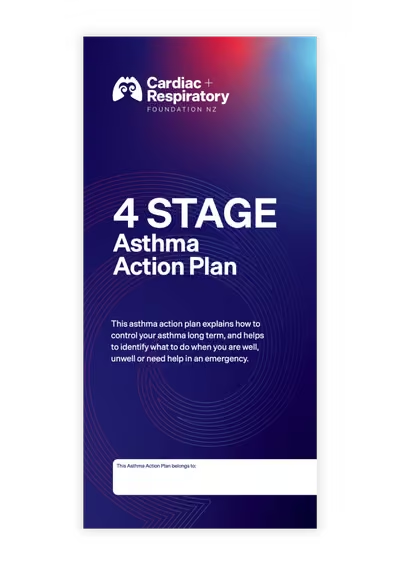
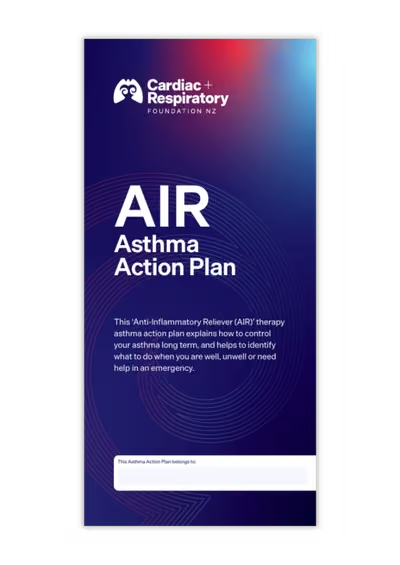
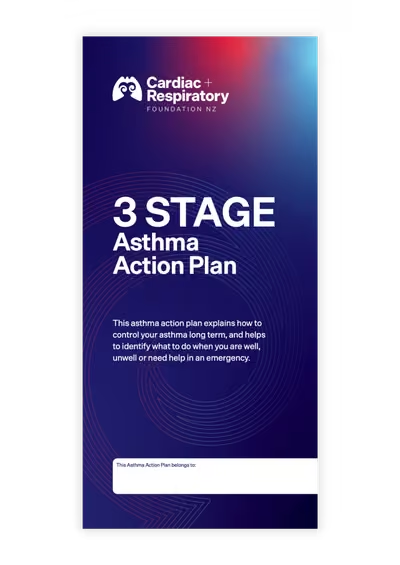
Adolescents and adults will use one of three asthma action plans (AIR Asthma Action Plan, 3 Stage Asthma Action Plan, or the 4 Stage Asthma Action Plan), depending on the medicines prescribed for them by their healthcare practitioner.
An asthma action plan contains:
- Your name, the name of your healthcare practice, the name of the healthcare practitioner who has prepared the plan, the healthcare practitioner’s signature and the date.
- The names and current doses of your preventer and reliever inhalers (note: for the AIR Asthma Action Plan, this will be a single combination inhaler containing budesonide/formoterol), plus any other medicines prescribed for your asthma (e.g. a short course of prednisone tablets).
- A “traffic light”-based management system, outlining what symptoms indicate that your asthma is under control, getting worse, or moving to severe or to a life-threatening asthma emergency.
- Instructions on how to increase the dose of your reliever and preventer inhaler, or combination budesonide/formoterol inhaler.
- Instructions on when you need to contact your healthcare practitioner for a same-day appointment.
- Instructions on when to start taking oral prednisone and how to take this medication (if it has been prescribed for you).
- For those with peak flow instructions, it will record your best and worst peak flow readings at each level of the plan.
Research shows that people who use an asthma action plan have better control over their asthma. Having an asthma action plan reduces emergency visits to primary care or after-hours surgeries, hospital admissions, and reliever medication use.
Asthma action plans should be reviewed and updated at least once a year, or if there is a change to your medication.
Take your medication as prescribed
Take your medication as prescribed
It is important that you understand how your medicines or asthma inhalers work, and take them as prescribed. There are different devices to deliver your medicines. Read more about asthma medications.
Use a peak flow meter
Use a peak flow meter
A peak flow meter measures how fast you can blow air out of your lungs. When your airways are fully open and you are well, you will get a high reading. When your airways start to get narrow and you are experiencing asthma symptoms, the reading becomes lower.
You can use these readings, together with your symptoms, to decide when you need to take action and change your treatment by following your asthma action plan. You can record these readings in a Peak Flow and Symptom Diary.
What is a peak flow meter?
A peak flow meter is a small plastic device with a measuring gauge down the side. The levels on the peak flow meter measure how much air you can breathe out in one fast breath, which then indicates how well your lungs are functioning.
Why do we use peak flow readings?
Peak flow meters are used to determine your ‘best peak flow’, which is your benchmark reading of how strong your lungs are when you are healthy and without symptoms. This measurement is used as part of your asthma action plan. If your peak flow reading starts to drop below your ‘best peak flow’ reading and you have asthma symptoms (wheeze, tight chest, a cough or feeling breathless), follow the advice on your personalised asthma action plan on how to step up your medication and when to see your healthcare practitioner.
You can use a peak flow meter at home to:
- Assess how well your asthma medication is working.
- See how well-controlled your asthma is over time.
- Check how you are doing against your asthma action plan.
How do I find my ‘best peak flow’?
To find your personal ‘best peak flow’ reading, take your peak flow every day, morning and night, before taking your asthma medicine, for one week, following the instructions in this Peak Flow and Symptom Diary. Your asthma should be under control during this time.
Write down the number you get for each peak flow measurement. The highest peak flow reading you have during this week is your ‘personal best’.
It is important to remember that your ‘best peak flow’ reading can change over time. Ask your health professional when you should reassess for a new personal best peak flow.
If you have a Peak Flow and Symptom Diary, record your peak flow readings in the diary and on the graph – this will quickly pick up any changes or trends in your asthma control. Keeping a Peak Flow and Symptom Diary is a useful monitoring tool if your asthma medication has been changed, if you are currently unwell (e.g. have a cold or the flu), or you have recently experienced an asthma flare-up and you are monitoring your asthma control.
Visit your healthcare team regularly
Visit your healthcare team regularly
It is important to build a partnership with your healthcare practitioner, asthma educator and pharmacist. Following their advice should help you reduce the number of symptoms you experience. See your healthcare practitioner if your asthma is interfering with your daily activities or worrying you in any other way.
Keep active
Keep active
Being physically active is especially important for people with asthma, although some people are afraid it might cause an asthma flare-up. However, by following some simple tips, most people can exercise free of asthma symptoms. Physical activity improves lung capacity, blood flow, and is calming, fulfilling and fun.
Active people usually find they have less asthma and cope better when they do have it. Health New Zealand recommends that adults aim to do at least two-and-a-half (2½) hours of moderate physical activity (this can be spread out during the week) and muscle strengthening activities on at least two days. Health New Zealand also provides activity guidelines for children under five years of age, children and young people (5 to 17 years), and older people (aged 65 years and over).
Many people get more wheezy with exercise because their asthma is not as well-controlled as it could be. See your healthcare practitioner to review your medicines and ask for an asthma action plan. Activities involving a lot of stopping and starting or that take place in a warm, moist environment are less likely to trigger asthma. Swimming, walking, tramping, tennis, yoga, martial arts, tai chi, aerobics, or team sports are all good options. Use your reliever inhaler as instructed, just before you exercise.
Be smokefree and vapefree
Be smokefree and vapefree
Make it a rule that your home is smokefree and vapefree at all times for everyone.
Cigarette smoke contains 7,000 chemicals, hundreds of which are known to be harmful. The lungs are particularly damaged by inhaling cigarette smoke.
Why is smoking especially harmful to people with asthma?
- It reduces your lung function.
- It may increase your chances of having asthma flare-ups.
- It makes your day-to-day asthma control harder to achieve and increases the need for asthma medications.
- It may increase your sensitivity to other environmental triggers (e.g. pets, pollens and chemicals).
- It increases your chances of permanently damaging your airways, including developing COPD (Chronic Obstructive Pulmonary Disease).
In addition, the rapid rise in the use of e-cigarettes (vaping) is an ongoing concern. Many vapes contain nicotine, including products that claim to be nicotine-free. Vapes contain additives and flavours which have been approved for use in food products, but haven’t been tested as to whether they are safe when inhaled into the lungs.
While we don’t know the exact cause of asthma, we do know that asthma is believed to be caused by a combination of genetic and environmental factors. It is too early to tell how (or if) vaping plays a role in the development of asthma. However, research has so far found that vaping and second-hand vaping can irritate the lungs, cause coughing and worsen symptoms of respiratory conditions like asthma.
For help with quitting, visit Quitline (0800 778 778).
Periods and asthma
Periods and asthma
Some women find that their asthma is worse around the time they first start menstruating, although this usually settles down as their menstrual cycle becomes established. However, women with severe asthma may find that their symptoms are worse just before or during menstruation. Keeping a Peak Flow and Symptom Diary will help you clarify whether this is an issue for you. If you don’t already have one, talk to your healthcare practitioner about an asthma action plan, and whether it could include taking extra treatment during the week before your period.
Some over-the-counter medications used for period pain (aspirin and other non-steroid anti-inflammatory tablets, e.g. ibuprofen (Nurofen®), mefenamic acid (Ponstan®), naproxen (Naprogesic®) and diclofenac (Voltaren Rapid®)) can induce an asthma attack in some people. Paracetamol (Panadol®) is usually a safe pain reliever. The oral contraceptive pill does not affect asthma.
Pregnancy and asthma
Pregnancy and asthma
The most important advice for pregnant women is not to smoke, and this is even more important if there is a family history of asthma. Around one third of women find their asthma improves in pregnancy, one third find it stays the same, and one third find their asthma gets worse.
If your asthma gets worse, you may need to increase your medication and revise your asthma action plan with your healthcare practitioner. You will also need to discuss your plans for the delivery of your baby. If your asthma is severe, the delivery may be best handled in a hospital environment to access appropriate support if required. During labour and delivery, you have the same choice of pain medication as any woman. If you do have an asthma attack or flare-up during pregnancy, treat it as you would normally.
Inhaled asthma treatment will not harm your baby during pregnancy. Your baby will do best if you are breathing well, so your asthma must be well-controlled.
Having poorly controlled asthma or having an asthma flare-up during pregnancy increases the risk of pregnancy complications such as low birth weight or pre-term birth. Ask your healthcare practitioner or lead maternity carer about having more frequent check-ups for your asthma if you are experiencing any worsening asthma symptoms.
Breastfeeding and asthma
Breastfeeding and asthma
Inhaled asthma medications are not found in breast milk. If you have to use corticosteroid tablets, the small quantities found in the breast milk will not have any harmful effect on your baby.
Asthma medications
Medication plays a very important role in the day-to-day management of asthma.
It is important to understand how your medicines work and then to take them as directed by your healthcare practitioner.
There are two main types of asthma medicine:
- Preventer inhalers treat the inflammation in your airways, which is the underlying cause of asthma. This medication reduces the risk of an asthma flare-up (attack). They also reduce the amount of mucus produced in the airways and long-term damage to the lungs. All types of preventer inhalers in New Zealand contain an anti-inflammatory medicine called a corticosteroid. This is sometimes referred to as a ‘steroid’. Corticosteroids are not the same as steroids used by bodybuilders. See 'Preventer inhalers' below.
- Reliever inhalers bring quick relief from asthma symptoms (cough, wheeze, tightness in the chest, shortness of breath). Reliever medication works by relaxing the bands of muscle around the airways, which tighten during an asthma flare-up (attack). See 'Reliever inhalers' below.
Preventer inhalers
There are two different types of preventer inhalers. Your healthcare practitioner will advise on which preventer is best for you.
The recommended preventer inhaler for people 12 years and older is the 2-in-1 combination inhaler containing the preventer medicine budesonide and the fast-acting reliever medicine formoterol (Symbicort® and DuoResp Spiromax®). The reliever medicine, formoterol, provides immediate relief of asthma symptoms and ongoing relief of symptoms for up to 12 hours.
For people with mild asthma, this inhaler can be used as a reliever alone without any maintenance treatment; in moderate to severe asthma, this inhaler can be used as both a regular scheduled maintenance and a reliever treatment. This means you use this inhaler once or twice daily (as you would a preventer inhaler) and as needed to treat asthma symptoms (as you would a reliever). This treatment is called ‘Single Maintenance And Reliever Therapy’ (SMART) by healthcare practitioners. You do not need a separate reliever inhaler when using this treatment.
Note: Children with moderate to severe asthma may be prescribed the combination inhaler Symbicort®, on specialist advice.
Single ingredient preventer inhalers
Single ingredient preventer inhalers
Single ingredient preventer inhalers only contain one preventer medication. Examples of these inhalers are Flixotide®, Pulmicort®, Beclazone® and Qvar®.
These inhalers need to be taken every day as a regular scheduled maintenance treatment to control asthma. If you only take your preventer inhaler occasionally, or stop taking it if you feel well, it can cause your asthma to get worse.
These inhalers do not provide immediate relief from asthma symptoms and cannot be used in asthma emergencies. For this reason, they need to be used alongside a separate fast-acting reliever inhaler like Ventolin®, SalAir® or Bricanyl®.
Combination 2-in-1 preventer inhalers
Combination 2-in-1 preventer inhalers
Combination 2-in-1 inhalers contain both a preventer and a long-acting reliever medication. In every dose from a combination inhaler, you get preventer medication which reduces the underlying inflammation AND a long-acting reliever medication which relaxes the tightened muscles around the airways, helping you to breathe easier. Examples of this type of inhaler include Seretide®, Breo Ellipta® Symbicort®, DuoResp Spiromax® and Vannair®.
The combination 2-in-1 preventer inhalers Seretide®, Breo Ellipta® and Vannair® must be used as a regular scheduled maintenance treatment alongside a separate fast-acting reliever inhaler (e.g. Ventolin®, SalAir® or Bricanyl®) for immediate relief of asthma symptoms, or in an asthma emergency.
In people aged 12 years and older, the combination 2-in-1 preventer inhalers Symbicort® and DuoResp Spiromax® can be used as either a reliever medication alone, or as a regular scheduled maintenance and reliever medication. These dry powder inhalers contain the preventer medicine budesonid and the fast-acting reliever medicine formoterol. There is no need to have a separate reliever inhaler.
Reliever inhalers
Relievers are taken as needed to relieve asthma symptoms (cough, wheeze, tightness in the chest, shortness of breath), before exercise, or during an asthma flare-up (attack). They work quickly, with the effects felt within five minutes.
There are two different types of reliever inhalers.
The recommended reliever inhaler for adults and adolescents 12 years and over, is the 2-in-1 combination inhaler containing the preventer budesonide and the fast-acting reliever formoterol (Symbicort® or DuoResp Spiromax®).
For people with mild asthma, this inhaler can be used on its own as a reliever and only taken as needed for asthma symptoms; for people with moderate or severe asthma, this inhaler can be used both as a regularly scheduled maintenance treatment and as a reliever as needed for asthma symptoms. Each time you use this inhaler you get the immediate relief from the reliever medicine, plus a dose of the preventer medicine which reduces the risk of an asthma flare-up. When used as a reliever treatment, it is sometimes called ‘Anti-inflammatory Reliever’ (AIR) therapy by healthcare practitioners.
You do not need a separate preventer inhaler if you are using this treatment.
Single ingredient reliever inhaler
Single ingredient reliever inhaler
Common reliever inhalers include Ventolin® and SalAir®. These two inhalers contain the same medicine, salbutamol, and give the same dose. There is also another reliever called Bricanyl®. This contains a medicine called terbutaline which works in a similar way to salbutamol. These reliever inhalers do not deal with the underlying cause of asthma, which is inflammation inside your airways. For this reason, these reliever inhalers must be used alongside a separate preventer inhaler to treat the inflammation.
(Note: this is different for children under 12 years of age, where a reliever inhaler can be used on its own for the treatment of mild asthma. If your child needs to use their reliever inhaler more than twice a week for symptoms, then their asthma is not under control and you should get them checked by your healthcare practitioner).
If you are 12 years or older, single ingredient reliever inhalers should not be used as your only treatment for asthma.
If your asthma is well-controlled, you should only be using a maximum of three cannisters of this type of reliever inhaler in a year (this equates to more than one dose of a reliever inhaler daily). Using more than three of these reliever inhalers in a year is associated with increased risk of flare-ups (attacks), emergency department visits and hospitalisation. If you are using more than this, talk to your healthcare practitioner.
Two-in-one combination reliever inhaler
Two-in-one combination reliever inhaler
2-in-1 combination reliever inhalers include the brands Symbicort® and DuoResp Spiromax®. These contain a preventer medicine (budesonide) and a fast-acting reliever medicine (formoterol). This provides immediate relief of asthma symptoms by opening up the airways, as well as reducing the risk of an asthma flare-up (attack).
The 2-in-1 combination budesonide/formoterol inhaler cannot be used as a reliever together with another separate regularly scheduled maintenance 2-in-1 combination treatment such as Seretide® or Breo Ellipta®.
Add-on treatments
If you are using your inhalers exactly as prescribed, but you are still having asthma symptoms, then your healthcare practitioner may consider additional treatments. These are called ‘add-on’ treatments because they are taken in addition to your regular inhalers.
- Prednisone (or prednisolone)
An oral tablet (or liquid) form of a corticosteroid medicine. This medicine helps to bring down the inflammation (swelling) inside the airways, and reduces the amount of mucus produced. It is used in severe episodes of asthma, on top of your regular inhalers. If you or your child is having difficulty controlling your asthma symptoms, your healthcare practitioner may prescribe a short course of prednisone. This medicine is usually taken for three to five days for an asthma flare-up. Children who need frequent or continuous use of this medication (more than 14 days in a 12-month period) should be referred to a paediatric respiratory physician for review. - Montelukast
A tablet form of medicine (or chewable tablet for children) that is used in addition to regular inhalers, when you are having difficulty controlling your asthma. It works by blocking some of the chemicals that cause inflammation and narrowing of the airways. Warning: Montelukast may be associated with behaviour change and sleep disturbance in children. In adolescents, there is a risk of suicidal ideation and self-harm. Montelukast should be used with caution under 18 years of age and carers advised to stop the medication if there are concerns. - Biologics
A new treatment used for adults and children who have severe, uncontrolled asthma, they are used in addition to regular asthma medication . Biologics are also known as monoclonal antibody therapy. Biologics reduce flare-ups and reduce the need for oral corticosteroid medicines (prednisolone and prednisone). They are used when other medications are not working to control asthma and are only available in New Zealand to people who meet certain criteria. These treatments are given as injections every four to eight weeks.
Asthma devices
Inhalers
Inhalers are one of the most common and effective ways to treat asthma. If you are prescribed an inhaler, you need to know how to use it properly. Your healthcare practitioner should demonstrate how to use your inhaler when you first get one, and you should regularly check your inhaler technique with your healthcare practitioner, pharmacist, or asthma educator.
If you don’t use your inhaler correctly, you will not be getting the all the medicine you need to manage your asthma.
There are two main types of inhaler devices in New Zealand - a pressurised metered dose inhaler (MDI) that is often called “puffer”, and dry powder inhalers that deliver medicine in a powder form. For information on how to use these devices (and others) correctly, see here.
Other devices
Spacers
These are clear, plastic cylinders that attach to puffer inhalers. Spacers help ensure that the medicine reaches your lungs and doesn’t just end up in the back of your mouth and throat. Spacers are recommended for everyone using puffer inhalers, including adults. Read more here about spacers and how to use one accurately.
Nebulisers
These are devices that turn liquid medicine into a fine mist that you can breathe in easily. A nebuliser can be useful for people with asthma; however, research has found that reliever puffers used with spacers can be just as effective. Learn more about nebulisers here.
Asthma emergencies
A severe asthma flare-up or asthma attack can happen to anyone with asthma, at any time. Symptoms may get gradually or suddenly worse.
In an asthma attack, people’s airways may swell and narrow, causing wheezing, coughing and difficulty breathing.
Signs you need to start asthma first aid and seek urgent medical help (call 111 for an ambulance) immediately include:
- symptoms get worse very quickly
- reliever inhaler has little or no effect
- difficulty talking
- lips or fingernails have a grey or bluish tinge
- nostrils flare when you breathe
- heartbeat or pulse is very fast
- skin is pulled in around the ribs or neck when the person breathes
- collapsing/difficult to walk
What to do in an asthma emergency
In an emergency, try to stay calm.
It helps to remember the six ASTHMA steps: Assess, Sit, Treat, Help, Monitor, and All OK!
Assess
Assess the severity of the emergency by comparing their symptoms in the table below.
| Mild | Moderate | Severe |
|---|---|---|
Mild symptoms, indicating that asthma is worsening, can include: |
Moderate symptoms, indicating that asthma is worrying, can include: |
Severe symptoms, indicating an asthma emergency, can include: |
A slight wheeze |
Obvious breathing difficulties |
Fear |
Mild cough |
Persistent cough |
Gasping for breath |
Coughing or wheezing when excited or running |
Difficulty speaking a complete sentence |
Difficulty speaking more than one or two words |
Looking pale and sounding quiet |
||
Complaining that the reliever medicine is not working |
||
Unresponsive – doesn’t answer when spoken to |
||
DIAL 111 FOR AN AMBULANCE |
Sit
Sit your child upright and stay with them. Lean them forward slightly and support their arms either on their knees or on a table.
Treat
Treat mild asthma symptoms with two puffs of a reliever inhaler. Treat moderate or severe symptoms with six puffs of the inhaler. If the reliever medicine comes in a metered dose inhaler, use a spacer. Put the spacer into the child’s mouth. Puff the inhaler once into the spacer and have the child breathe in and out six times.
Encourage your child to breathe as normally as possible.
Help
If your child’s asthma does not start to get better after six minutes, or if you or your child are frightened, call an ambulance. Continue giving your child six puffs of their reliever inhaler every six minutes until help arrives. Make sure they take six slow breaths for each puff. Keep doing this until they get better, or the ambulance arrives.
Remember 'six': Six puffs, six breaths for each puff, and repeat every six minutes
Monitor
Stay with your child and watch carefully, even if they seem to get better. If your child is not finding it easier to breathe, give repeat doses of the reliever inhaler and call an ambulance.
All ok
Your child can return to quiet activities when they no longer wheeze, cough or feel breathless. Keep monitoring their symptoms and take action if required, following the steps in their action plan. If your child’s attacks are becoming more frequent or worrying, see your doctor as soon as possible.
Related resources
All resourcesAIR Asthma Action Plan
This ‘Anti-Inflammatory Reliever (AIR)’ therapy asthma action plan shows how to control your asthma long term, and helps to identify what to do when you are well, unwell or need help in an emergency.
3-Stage Asthma Action Plan
This self-management action plan for adolescents and adults (aged 12 years and over) is to be completed by healthcare practitioners, together with their patients.
4-Stage Asthma Action Plan
This self-management action plan for adolescents and adults (aged 12 years and over) is to be completed by healthcare practitioners, together with their patients.