Air pollution
The air we breathe directly affects our hearts and lungs. We're calling on the Government to treat clean air as the public health priority it is.

The problem
New Zealand likes to think of itself as a clean, green country. But the reality is more complicated.
Air pollution kills an estimated 3,300 New Zealanders every year and is responsible for more than 13,100 hospital admissions for respiratory and cardiac illnesses annually. In Auckland alone, traffic-related air pollution claims more than 700 lives a year - a death toll that now rivals smoking.
Research shows that 81% of New Zealanders live in areas where average pollution levels exceed World Health Organization guidelines. Air pollution from vehicles and solid-fuel heating is causing real harm, including an estimated 13,000 cases of childhood asthma and 845 hospitalisations for children with asthma in a single year.
Pollutants like nitrogen dioxide and fine particulate matter damage the lungs triggering asthma, reducing lung function, and increasing the risk of lung cancer. Particles can also pass into the bloodstream, increasing the risk of heart attack and stroke. Globally, an estimated 4-6 million of the 20 million cardiovascular deaths each year are attributable to environmental factors.
The solution
The Cardiac and Respiratory Foundation NZ is calling on the Government to:
- Reduce emissions from solid-fuel home heating and industry
- Introduce real-time national monitoring of NO₂, PM2.5, and PM10 pollutants
Learn more
New air pollution report prompts renewed calls for action
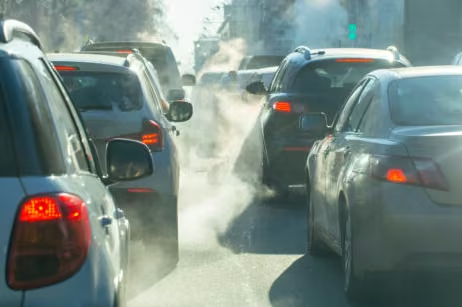
Traffic pollution kills more than 700 Aucklanders annually, rivalling smoking, yet action lags.
Your home and your health

A warm, dry, well-ventilated home is good for everyone, but if you or someone in your whānau lives with a respiratory condition, it can be the difference between staying well and ending up unwell.