Vaping and smoking
New Zealand was once a world leader on smoke-free policy. But we've lost ground, and our kids are paying the price.

The problem
Vaping was introduced as a quit-smoking tool, and for some people it can help.
But the consequence of releasing vape products into a largely unregulated environment is that they became widely available to young people.
They are marketed as colourful products with catchy names, with the nicotine content far less prominent than the flavours.
Before regulations came in, some vaping products contained nicotine concentrations of up to 50mg/ml - equivalent to smoking 25 to 50 cigarettes.
Daily vaping rates among young people aged 15 to 24 have reached 18.6%. The rates are even higher among Māori rangatahi. We now have over 1,500 specialist vape retailers registered in New Zealand, in addition to dairies, petrol stations and supermarkets.
The World Health Organization concluded that vaping products are not without harm, and that adolescents double their risk of starting smoking if they vape.
The long-term risks are still emerging, and young people often see the flavour, not the risk.
What nicotine does to your heart and lungs
Nicotine harms both the respiratory and cardiovascular systems.
It damages airways, causes inflammation, and can reduce lung function.
Research has found that some flavouring chemicals used in vapes can damage blood vessel cells and disrupt normal heart rhythms. Vaping also raises heart rate and blood pressure, stresses the cardiovascular system, and is linked to an increased risk of heart attack and stroke.
Smoking remains one of the leading causes of heart disease and respiratory illness in Aotearoa, and vaping is not the safe alternative it was marketed as.
The best thing anyone can do for their heart and lung health is to be both smokefree and vapefree.
The solution
The Cardiac and Respiratory Foundation NZ is calling on the Government to:
- Ban vape flavours
- Stop issuing new specialist vape retailer (SVR) licences
- Remove tobacco and vape sales from dairies, petrol stations, and supermarkets
- De-nicotinise cigarettes and reinstate the sinking lid on tobacco imports
- Invest in youth vaping education, including Train-the-Trainer programmes
- Fund public health campaigns linking quitting smoking and vaping to better heart and lung health
- Set a bold new national target that covers vapes, cigarettes and snus: Nicotine-Free Aotearoa
Read more
Health organisation welcomes first medically-approved quit vaping product
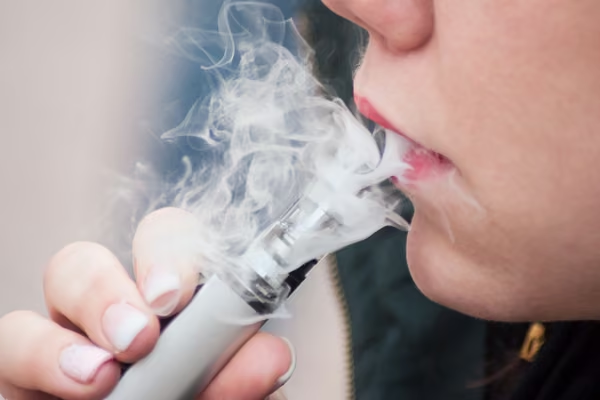
New Zealand's first approved quit aid for vaping dependence is a positive step, but tougher regulations remain vital.
UK smokefree generation plan sets global pace
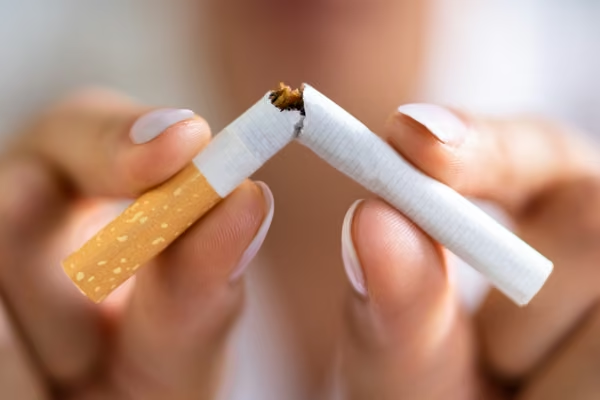
The UK is advancing a smokefree generation law, prompting calls for New Zealand to restore stronger measures.
Teen vaping crisis worsens, system 'truly failed to protect them'

New NZ Health Survey figures show daily vaping among 15–17-year-olds has risen from 10.3% to 13.6% in a year.